

The Scene: When the Night Belonged to Tennis
It’s Friday. The first week of the Australian Open. And without trying, memory pulls me back to another time. Around 2007, 2008, maybe 2012. Back when I was still living in South America, in Ecuador, and Australian Open nights felt different from any other tournament of the year.
I remember being at home with my parents. In the early rounds, matches would start around 10 p.m. We would watch a bit together after dinner, comment on the tennis, share the end of a long day, and then eventually everyone would go to sleep. The house would quiet down, lights turning off one by one, the day officially ending for everyone else.
But for me, that Grand Slam never really ended at night. What I remember most from those years, especially when I was still in school—was waking up in the middle of the night. Truly in the middle of the night. Three or four in the morning. The street completely dark, no cars, no noise, the entire house asleep. I would go downstairs carefully and turn on the TV with almost no volume, just enough not to wake anyone.
I would sit there watching tennis without many worries. Not thinking about being tired the next day. Not thinking about responsibilities, schedules, or what was coming next. Just watching the best tennis in the world while everything else felt paused. Sometimes I’d go to the kitchen, grab a glass of water, and come back to the couch, letting the match carry me.
Back then, technology was simpler. No smartphones constantly pulling attention. At most, I remember playing Snake on a Nokia during changeovers. But mostly, it was just me, the screen, and the sound of tennis barely breaking the silence. The ball striking the court. Lleyton Hewitt’s shouts. Rafa Nadal’s “¡Vamos!”. Novak Djokovic’s “Idemo!”. Roger Federer’s calm presence. It felt like watching a dream—one where, at that age, I still imagined myself being there one day as a player. Now, that dream has changed. These days, I’d be more than happy just to be there as a spectator.
The Ritual of Watching the Australian Open from the Americas
Australia has always felt impossibly far from the Americas. Almost on the other side of the world, with a time zone that runs nearly a full day ahead. Because of that, watching the Australian Open from South or North America has never been convenient. Matches are played in the middle of the night, often finishing between four and five in the morning. For anyone with school, work, or responsibilities the next day, the schedule borders on the unreasonable.
And yet, that difficulty was part of the ritual. Finals sometimes ended at sunrise, especially when matches stretched deep into five sets, like that unforgettable Australian Open final between Novak Djokovic and Rafael Nadal—the longest final in the tournament’s history. But even in more “normal” years, staying awake until five in the morning was the rule, not the exception. Watching the Australian Open demanded commitment. It required a quiet decision to sacrifice sleep simply because you cared enough to be there.
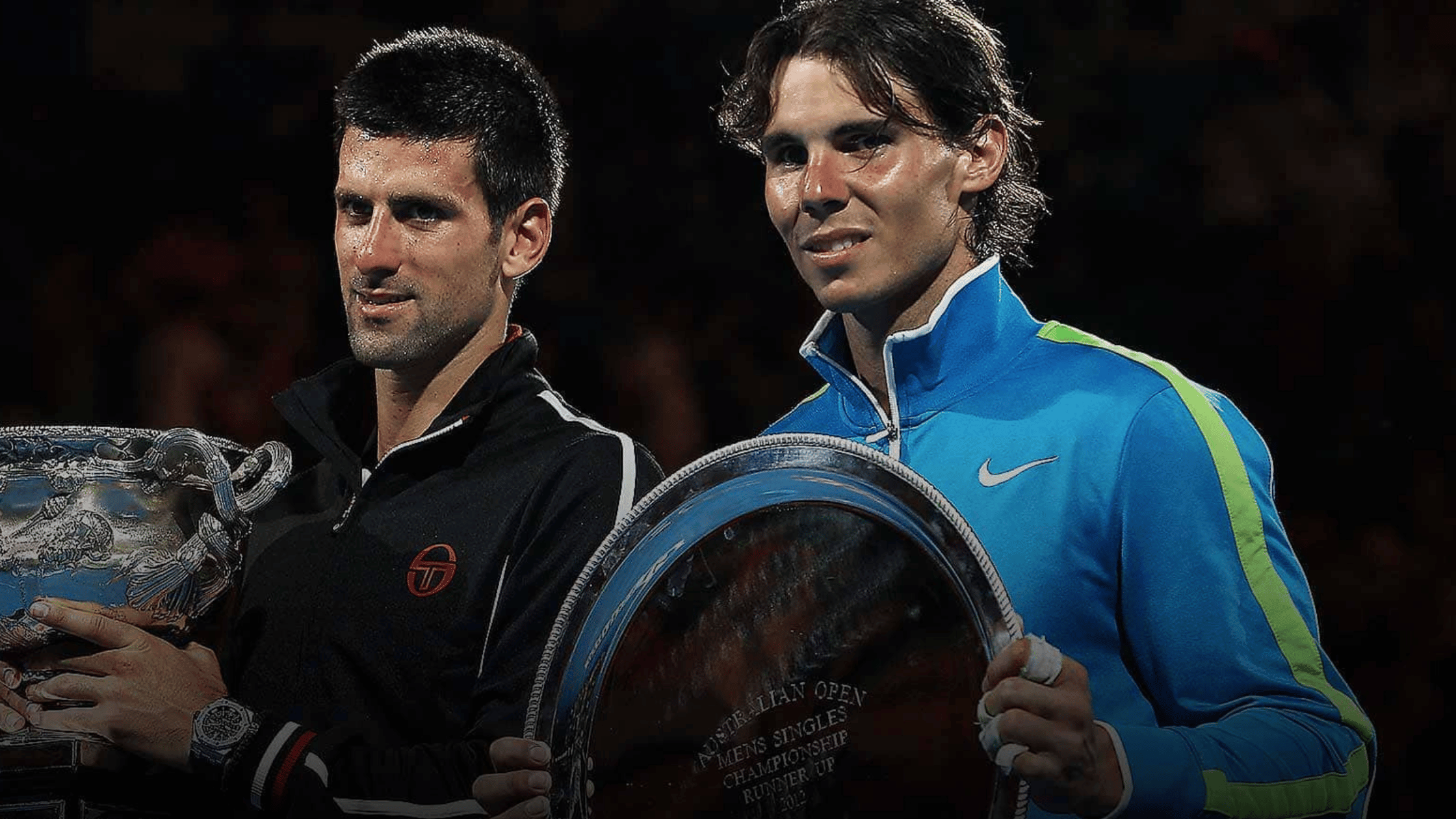
At the time, I was sixteen, seventeen, eighteen years old. As I mentioned earlier, it meant setting an alarm for three in the morning, especially during the final rounds, and getting up while the rest of the world slept. I remember 2009 particularly well. That was the year I became a fan of Jo-Wilfried Tsonga. I still have a poster of him in my room. He was my favorite player then, and I remember waking up in the early hours to watch his semifinal against Nadal. It was a masterclass. One of the best performances I’ve ever seen, so much speed, power, and aggression, overwhelming Rafa in straight sets. That match alone turned Tsonga into an idol for me.
Two days later, in the early hours again, Tsonga played the final against Djokovic. Djokovic won in four sets, if I remember correctly, claiming what would become the first of his ten Australian Open titles and the beginning of a historic Grand Slam career. I remember watching that final too, waking up to see my idol compete on the biggest stage, even though the result didn’t go the way I hoped. Those moments stay vivid precisely because of the effort it took to witness them.
By the time the tournament reached its final stages, the ritual became shared. I remember going to my parents’ bedroom, especially my dad—also a tennis fan—and knocking softly on the door. He would tell me that if I was waking up to watch, I had to knock so he could watch too. And I did. There we were, at three-thirty or four in the morning on a weekend, sitting together watching the Australian Open final. Sometimes my mom would join as well. Those are memories filled with warmth, closeness, and a sense of time suspended.
What made the Australian Open different from every other Grand Slam was precisely that. The US Open matched our time zone. Roland Garros and Wimbledon played finals in the European afternoon, which meant perfect morning viewing in South America. But the Australian Open demanded something else. The kids who woke up—or simply didn’t sleep—during those two weeks did so because they truly wanted to be there. Because tennis mattered enough to disrupt routine. Because for a brief window each year, nothing else felt more important than staying awake while the world slept.
The Big Three — and the Feeling of Having No Rush
Those years coincided with the absolute peak of the Big Three. The early 2010s—2011, 2012, 2013, 2014, 2015—when tennis felt almost unreal in its consistency and quality. Andy Murray briefly entered the conversation as part of what some called the “Big Four,” but history made one thing clear: the era belonged to three names. Roger Federer, Rafael Nadal, and Novak Djokovic. Each of them won the Australian Open in different years, in different ways, building a legacy that unfolded while many of us watched half-asleep, wrapped in blankets, in the middle of the night.
Around them, the tour was full of extraordinary characters. Nalbandian. Coria. Gaudio. Roddick. Del Potro. Tsonga. Monfils. Ferrer. Ferrero. Hewitt. A generation rich with personalities and styles that made tennis feel alive every single night. But even among all that talent, the Big Three stood apart. They weren’t just winning matches; they were shaping an era. And we were there to witness it, often at three or four in the morning, without fully realizing how rare it all was.
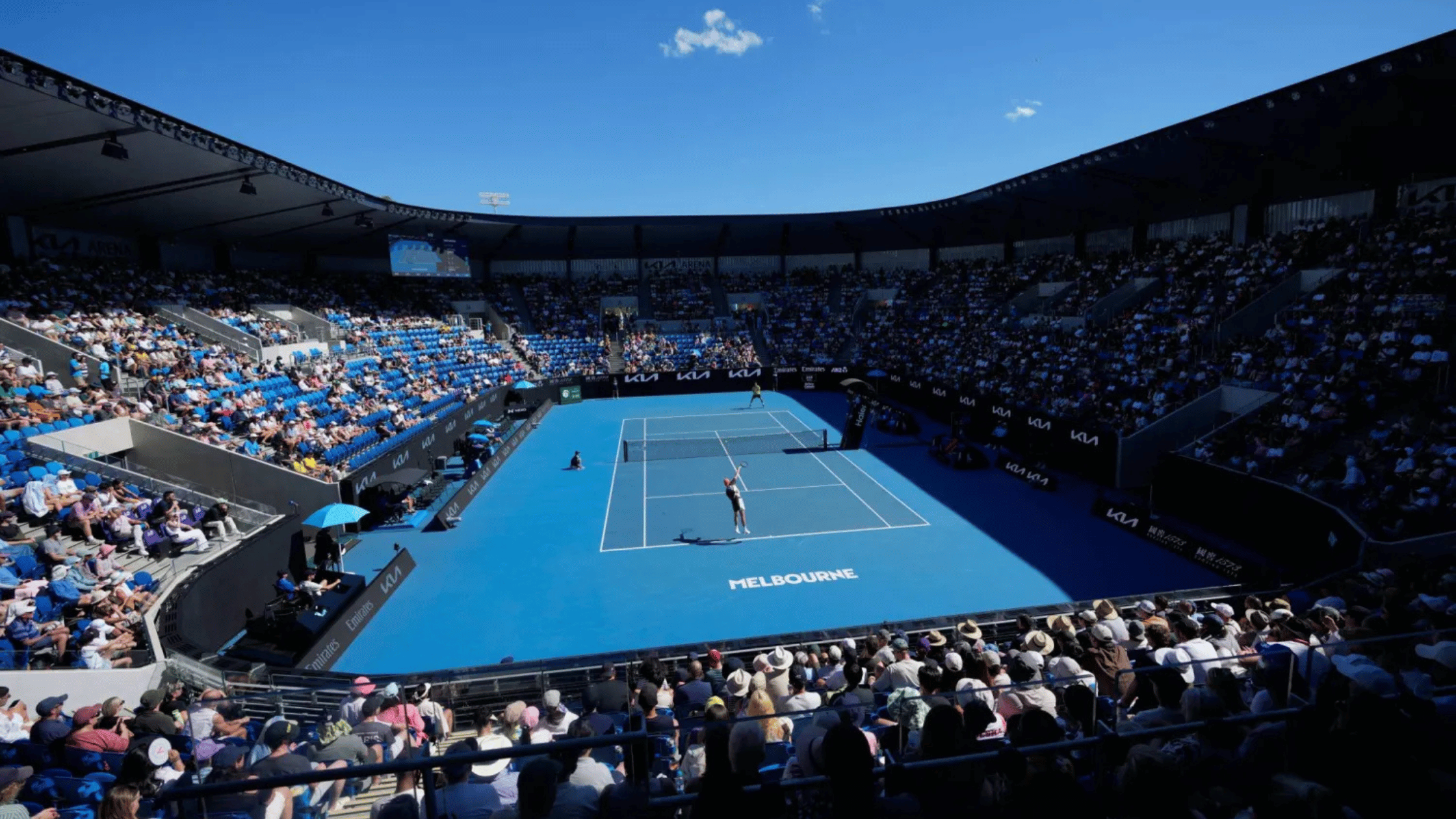
What made those nights special wasn’t only the tennis. It was the feeling that came with watching it. Most of us were still in school, maybe just starting university. Life hadn’t tightened its grip yet. There was no urgency pressing down on every hour. No deadlines, no business trips, no sales calls, no legal paperwork, no families depending on us. Watching the Australian Open at dawn came with a quiet freedom—the sense that you didn’t have to be anyone the next day.
You didn’t have to be a doctor, a lawyer, an entrepreneur. You didn’t have to show up polished or prepared for the world. Maybe you had school later. Maybe you’d meet friends. Maybe you’d go play tennis yourself. That was it. The future existed, but it didn’t demand immediate attention. And in that space, watching Federer glide across the court, Nadal fight for every point, or Djokovic outlast everyone felt like something deeply personal.
I’m convinced that anyone between their mid-twenties and mid-thirties who truly loved tennis will recognize this feeling. The Big Three weren’t just champions; they were part of a shared memory tied to a specific stage of life. Back then, the dream might have been to play the Australian Open one day. Now, that dream has transformed. For many of us, it’s simply to be there—to sit in the stands, to feel the heat, to hear the ball, and to remember what it once felt like to watch without hurry, while the rest of the world slept.
When Life Started to Press In
From those years—2010 to 2015—life has changed profoundly. For many of us, school and university are long behind. We are working now, building projects, carrying responsibility, slowly understanding what it truly means to earn a living. You begin to realize that nothing sustains itself by accident. You need discipline. You need skills. You need routines. You need direction. You need goals—and the consistency to pursue them every single day.
With that realization comes respect. Respect for the work our parents did. For family members. For the people close to us who showed up day after day, quietly carrying weight we didn’t yet understand. That reality contrasts sharply with the calm and freedom of those early years, when time felt open and effort didn’t yet carry consequences. Today, responsibilities arrive from every direction: mortgages, rent, bills, deadlines, expectations, and the pressure to keep moving forward.
In my case, it means finding clients, making sales, building projects, creating websites, designing digital systems, writing content like this. Many days are long. Early mornings followed by late nights. Little space for rest. The fatigue is not only physical—it’s mental. What keeps you going is not comfort, but purpose. A sense of mission. A vision of where you’re heading. And, if you’re lucky, a family or community that supports you along the way.
This isn’t bitter nostalgia. We lived a beautiful stage of life, one that still brings a lot of smiles and gratitude. But that chapter has passed. Enjoyment doesn’t disappear—it changes form. It’s like moving from the passenger seat to the driver’s seat. You still enjoy the scenery. You still sing along to the radio. But now, you’re responsible for getting everyone safely from point A to point B.

Something undeniably shifted. That kid who once woke up at four in the morning to watch a Grand Slam final still loves tennis. Still loves the Australian Open. But now, that love looks different. It’s following the scores. Watching the highlights. Catching moments when time allows. Not because the passion is gone, but because life demands something else.
And that’s okay. Maybe now it’s our children, or our nephews, who get to live that stage. Maybe it’s our turn to pass the baton—just like my father did with me. Knocking on the bedroom door in the early hours of a Saturday morning, inviting him to come watch the Australian Open final together. Different stages. Same love. The cycle continues.
The Australian Open as a Memory of Freedom
Writing this now, remembering those years, brings a quiet sense of gratitude. Gratitude for having lived those nights. For the long hours without sleep. For the early mornings when the world felt paused and the only thing that mattered was what was happening on a tennis court on the other side of the planet. Gratitude for having shared those moments with my parents, and later for reliving them the next day through conversations with friends who had also stayed awake, living the same ritual.
Looking back, I realize that it probably wasn’t just about tennis. It was something deeper, even if we didn’t have the words for it at the time. It was a form of freedom we didn’t know how to name. A parallel world where obligations were minimal, where responsibility hadn’t yet settled on our shoulders, where the biggest concern was whether you’d get up to play tennis the next day or study for an exam. Life felt light, not because it was easy, but because it hadn’t yet demanded everything from us.
Now, ten or fifteen years later, those nights feel distant but intact. The memories haven’t faded. They’ve simply taken on meaning. I think about the effort it took to wake up, the choice to stay awake, the silence of the house, the glow of the television, and the feeling that time wasn’t chasing anyone. Those moments didn’t feel special back then. They just felt normal.
Only with distance does the picture become clear. Only now do I understand that those Australian Open nights weren’t just part of my tennis story. They were part of a life stage that no longer exists in the same way. And when I think back on it all—the silence, the fatigue, the matches, the shared mornings—I realize something simple and honest.
That’s what freedom looked like.
Some tennis moments stay with us not because of the score, but because of how they made us feel. This story inspired a special Australian Open poster, capturing those sleepless nights and quiet mornings that shaped a generation.
0 comments